

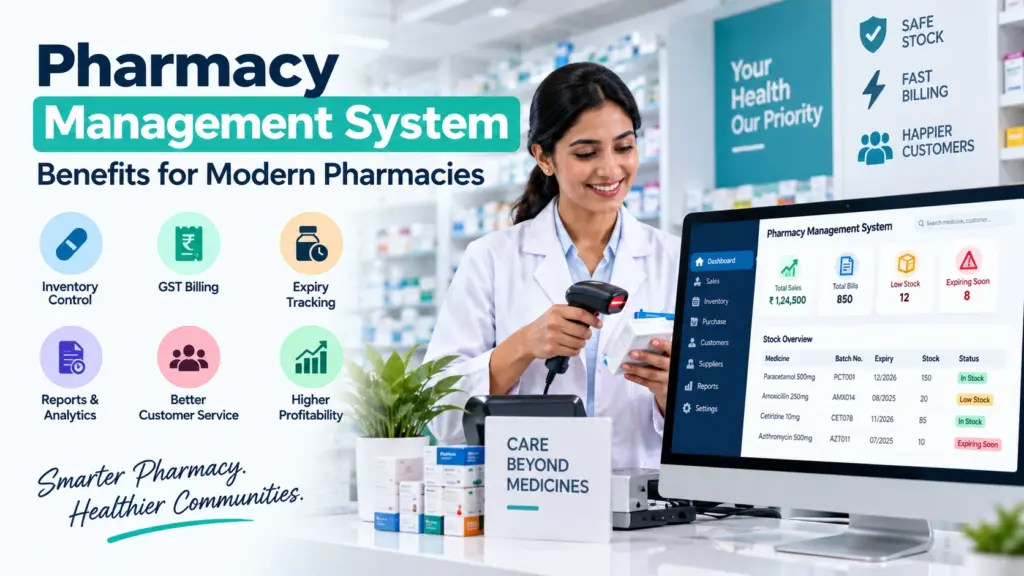
A pharmacy management system has quickly become essential as modern pharmacies move away from manual registers and basic billing tools toward fully digital operations. With hundreds of thousands of pharmacies across India managing tens of thousands of drug SKUs, batch numbers, and expiry dates, running a busy counter on memory and paper is no longer practical. The right software brings dispensing, inventory, billing, and reporting into one place, protecting both your margins and your patients. In this guide, the team at Neeti Healthcare explains how it works and why it matters.
What Is a Pharmacy Management System and How Does It Work?
A pharmacy management system is software that manages a pharmacy’s core operations, including dispensing, inventory, billing, expiry tracking, and reporting, from one connected platform. It records every medicine by batch and expiry, updates stock in real time as items are sold, and generates accurate GST bills at the counter. Because all these functions share the same data, the software removes the guesswork and manual re-entry that slow pharmacies down and cause costly errors.
Why Do Modern Pharmacies Need a Pharmacy Management System?
Modern pharmacies need one because manual processes can’t keep pace with the volume, compliance, and accuracy that today’s operations demand. Tight margins, short-expiry stock, GST rules, and customers who expect fast service all make automation a necessity rather than a luxury.
How Does It Reduce Manual Work?
It automates billing, stock updates, reorder alerts, and expiry tracking, so your team spends less time on registers and counting and more time serving customers.
How Does It Improve Pharmacy Operations?
Real-time stock visibility, batch tracking, and fast billing keep the counter moving and the stockroom under control, even on high-footfall days.
How Does It Improve Customer Service?
Faster, more accurate billing means shorter queues, and reliable stock means customers find what they need. Some systems also support refill reminders and digital bills for added convenience.
What Are the Key Features of a Pharmacy Management System?
The key features of a pharmacy management system cover dispensing, stock, billing, expiry, purchasing, and reporting. Look for all of the following.
Prescription and Patient Management
Prescription-linked dispensing that improves accuracy and keeps a clear record of what was sold.
Inventory and Stock Management
Real-time stock levels with low-stock alerts and batch-wise tracking across your shelves.
Billing and Invoicing
Fast, GST-compliant billing that keeps queues short and your books accurate.
Expiry Date Tracking
Automatic expiry alerts and first-expiry-first-out (FEFO) handling to stop losses before they happen.
Supplier and Purchase Management
Purchase orders, supplier records, and returns managed without the paperwork.
Reports and Analytics
Clear reports on sales, margins, fast and slow movers, and dead stock to guide decisions.
What Are the Benefits of a Pharmacy Management System?
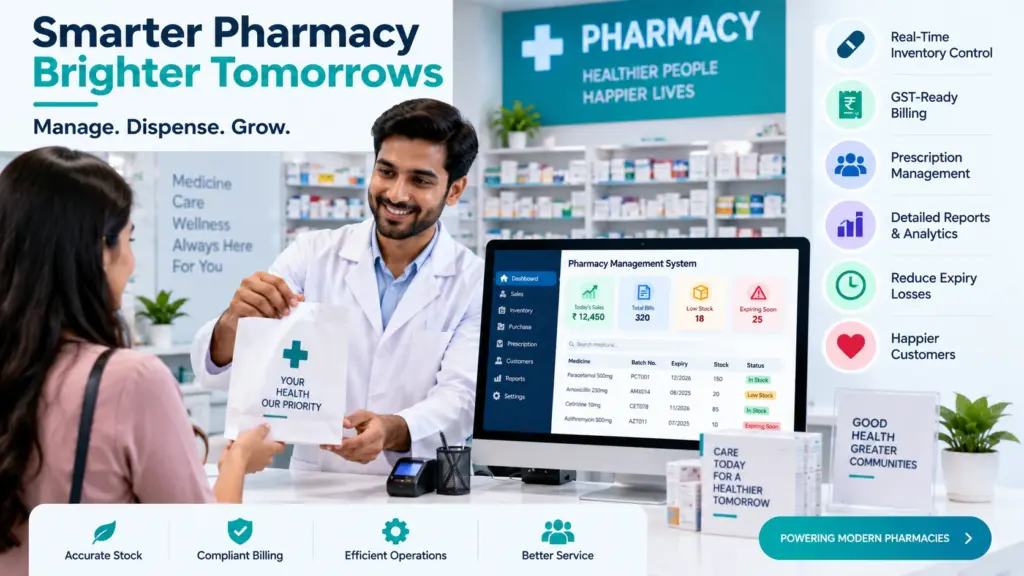
The biggest benefit is a pharmacy that runs tighter, faster, and more profitably, with far less waste. The table below shows where the value appears.
| Benefit | What it means for your pharmacy |
|---|---|
| Inventory Control | Real-time stock with reorder and batch tracking |
| Billing | Fast, accurate, GST-ready invoicing |
| Prescription Management | Linked dispensing that reduces errors |
| Reporting | Clear visibility of sales, margins, and dead stock |
| Efficiency | Less manual work and shorter queues |
| Customer Service | Reliable stock and quicker service at the counter |
How Does a Pharmacy Management System Improve Inventory Management?
It improves inventory management by tracking every item in real time and flagging problems before they cost you money. Good inventory control is often the single biggest source of savings for a pharmacy.
How Does It Track Stock Levels?
Stock updates automatically with each sale and purchase, giving you an accurate, live view of what’s on hand at all times.
How Does It Help Prevent Expired Medicines?
Expiry and batch tracking with FEFO logic flags short-dated stock early, so it’s used or returned before it expires. That cuts both financial loss and the patient-safety risk of expired medicine.
How Does It Reduce Stockouts and Overstocking?
Reorder alerts and sales data help you keep fast-movers in stock and avoid tying up cash in slow ones, reducing both lost sales and dead stock.
How Does Pharmacy Management Software Improve Billing and Sales?
Pharmacy management software improves billing by making it fast, accurate, and GST-compliant, which speeds up the counter and protects revenue. Prices, batches, and taxes are applied automatically, reducing manual errors and missed charges. Faster billing shortens queues at peak hours, while sales reports reveal your best-selling products and true margins, helping you sell smarter rather than just more.
How Can Pharmacies Choose the Right Pharmacy Management System?
Choose by matching the software to your pharmacy’s size and workflow, then confirming it’s easy to use and well supported. Keep these points in mind.
What Features Should You Look For?
Prioritise inventory with expiry and batch tracking, fast GST billing, purchase management, and clear reporting, the features you’ll use every day.
Is the System Easy to Use?
Your counter can’t slow down for complicated software. Look for a clean, fast interface your staff can learn quickly.
Can It Scale With Your Pharmacy?
Whether you run one store or a chain, the system should scale to multiple outlets with central visibility.
Does It Offer Data Security and Support?
Check for secure data handling, reliable backups, and responsive local support and training.
Is Neeti Healthcare’s Pharmacy Management Solution Right for Your Pharmacy?
Neeti Healthcare’s Eliven Pharmacy Management System is a Made-in-India platform built for how Indian pharmacies actually work: fast counters, tight stock control, and strict expiry and batch tracking. It handles dispensing, inventory, billing, and reporting in one place, and connects with the broader Eliven suite, including the Hospital Information System, for hospital and clinic pharmacies. Whether you run a single medical store or a multi-branch chain, it’s designed to keep your pharmacy accurate, stocked, and profitable.
Frequently Asked Questions About Pharmacy Management Systems
It’s software that manages a pharmacy’s core operations, including dispensing, inventory, billing, expiry and batch tracking, and reporting, from one connected platform. It reduces errors and losses while speeding up service.
Key benefits include tighter inventory control, fewer expiry losses, faster and more accurate GST billing, better reporting, less manual work, and improved customer service.
It tracks stock in real time by batch and expiry, sends low-stock and reorder alerts, and uses first-expiry-first-out logic to reduce both stockouts and expired stock.
Yes. Tracking expiry dates is a core function. The software records each batch’s expiry and flags short-dated stock early so it can be used or returned before it becomes a loss.
Yes. Many systems are affordable and simple enough for a single medical store, and can scale up as the business grows.
It applies prices, batches, and GST automatically, producing fast, accurate invoices that shorten queues and reduce missed charges.
Pricing varies by features and deployment, whether on-premises or cloud-based. As a general guide in India, subscription pricing commonly ranges from around ₹500 to ₹8,000 per month. Our own subscription includes the software, support, and upgrades, so always ask each vendor for a clear, all-inclusive quote.
External resource: For India’s drug regulations and standards, see the official Central Drugs Standard Control Organisation (CDSCO).